While you may be missing warmer days on the trails, winter does offer a unique opportunity to investigate animal tracks! Keep your eyes peeled after a fresh snowfall in your local park or natural area for any footprints or unusual patterns in the snow—it just might be a clue as to which neighborhood animals are out and about!
Below are a few examples of wildlife tracks Natural Areas Conservancy staff have spotted in the snow! Read on for some identification tips and what to look out for on snowy days.
1. Eastern Grey Squirrel (Sciurus carolinensis)
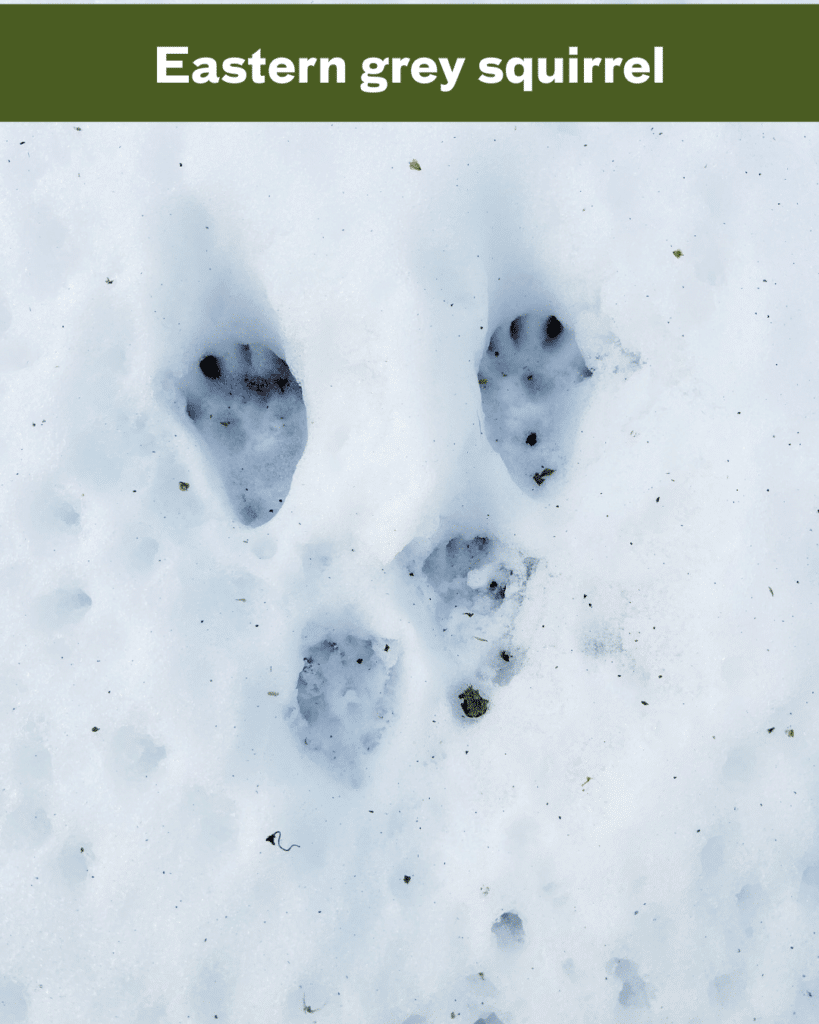
Clues to look for:
- Hind tracks (black legs) appear in the front and are larger, typically 5 cm long and 3-4 cm wide). You will likely see five toe indentations.
- Front leg tracks are smaller and appear in the back with four toe indentations
- Overall, with front and hind legs, the track takes a V shape
2. White-tailed deer (Odocoileus virginianus)
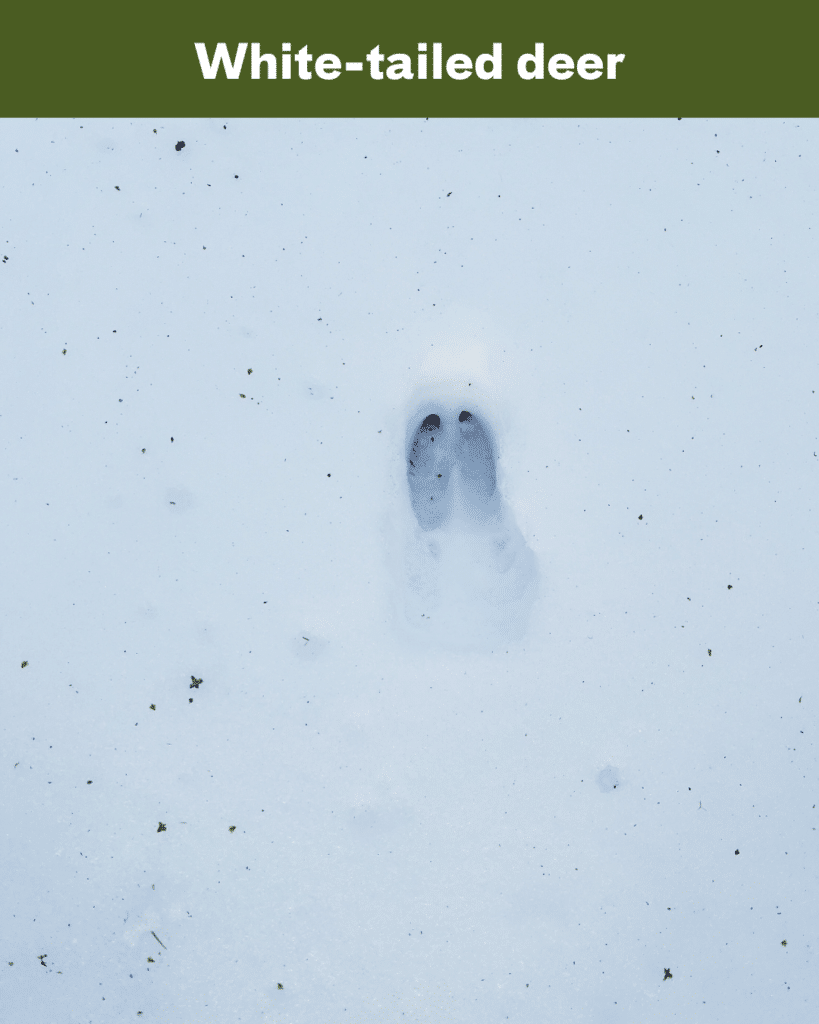
Clues to look out for:
- Often looks like an upside-down heart
- You might see pellet scat nearby!
- Similar-sized tracks for the front and back legs that appear in a line one after the other
- The size of the tracks are between 6-9 cm in length and 3-7 cm in width. You will notice a slight difference in size between male and females, with females being smaller
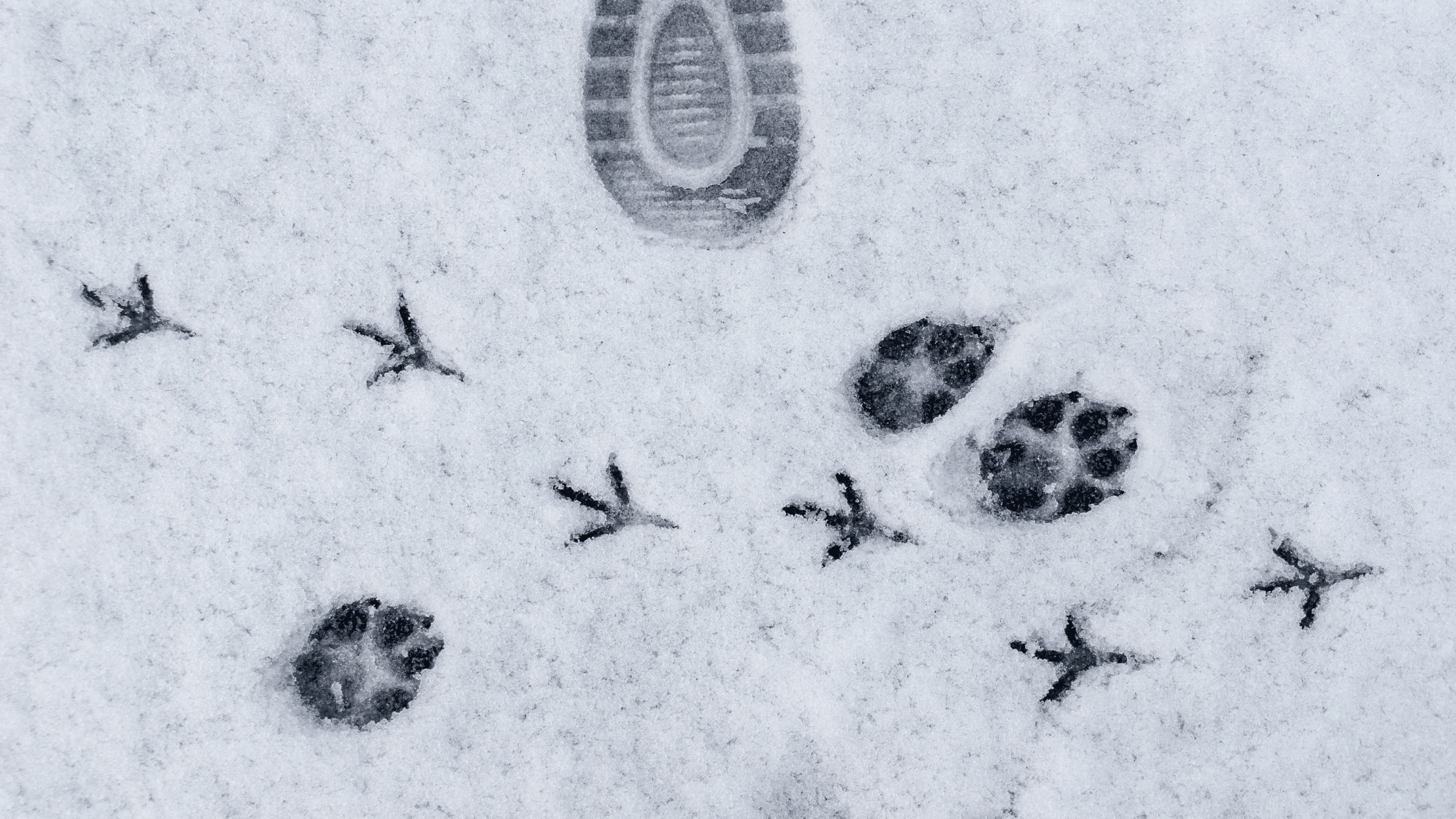
3. Wild turkey (Meleagris gallopavo)
Likely to only spot wild Turkeys in Staten Island and the Bronx
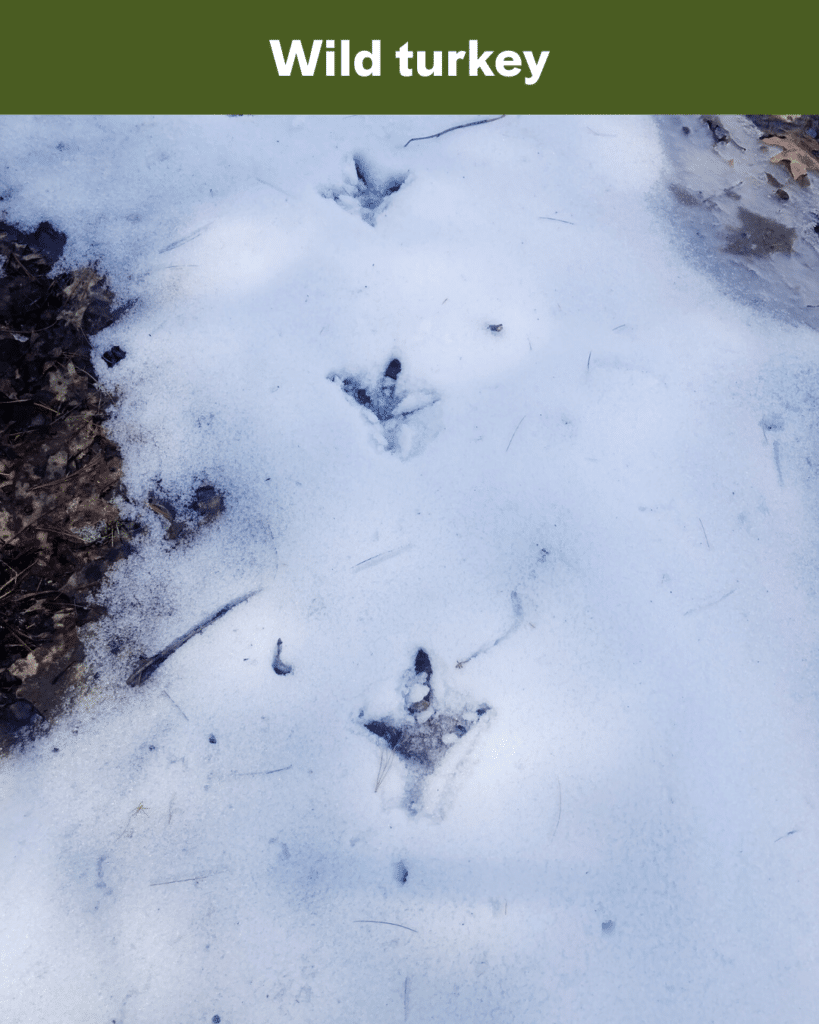
Clues to look out for:
- Look for a three-pronged print that looks like a small tree branch! These distinct digit prints (almost looking like large chicken tracks), measure 3.5 to 5 inches long
- If you take a closer look, you will see the imprint of the hind toe (the hallux)
- You may also be able to tell the left and right foot of a wild turkey apart by paying attention to where the hallux imprint points inward! If the hallux imprint is pointing to the right of the track, that’s a left foot. If the hallux print is pointing left, then it’s a right foot! (In the example below, from the bottom up the tracks show right, left, right, left!)
- Small indentations at the tops of the digits from the nail of the toes
- There is also an imprint in the middle of the track from the pad in the center of the foot
4. Eastern cottontail rabbit (Sylvilagus floridanus)
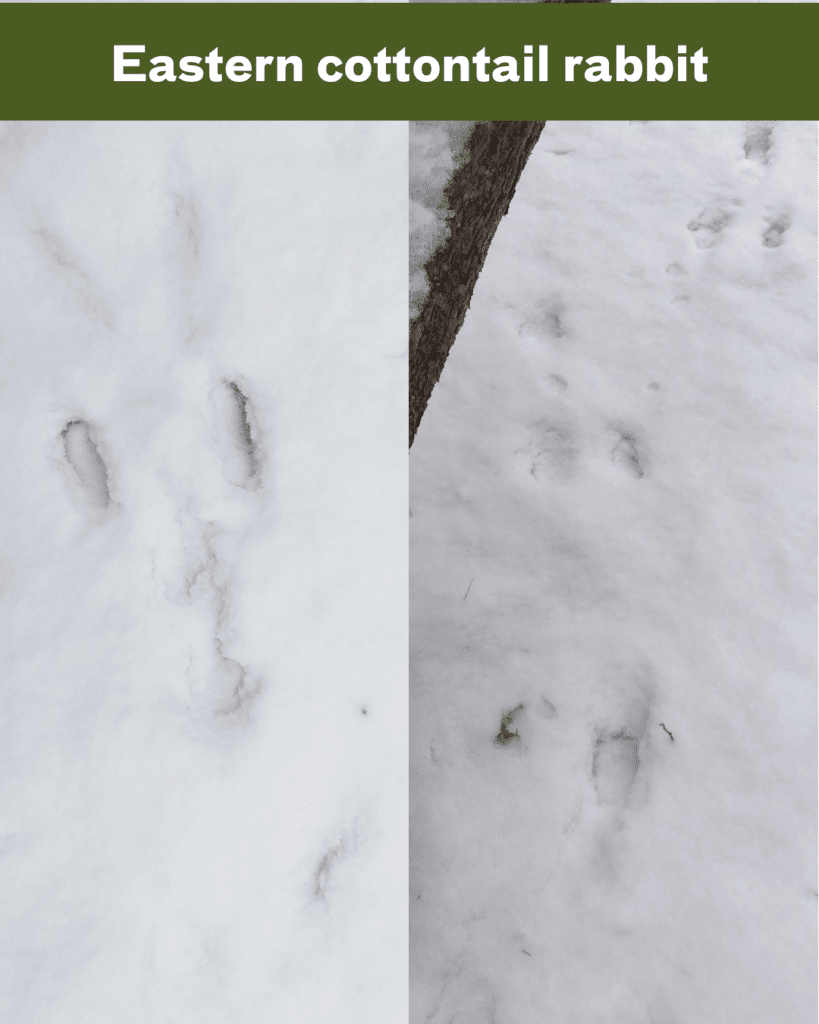
Clues to look out for:
- Footprints are not the same size, but all four—front and hind legs— are clustered together
- Hind foot prints are out front measuring 8-9 cm long and 3-4 cm wide
- Smaller front feet prints are at the back
5. Small rodent (rat or mouse)
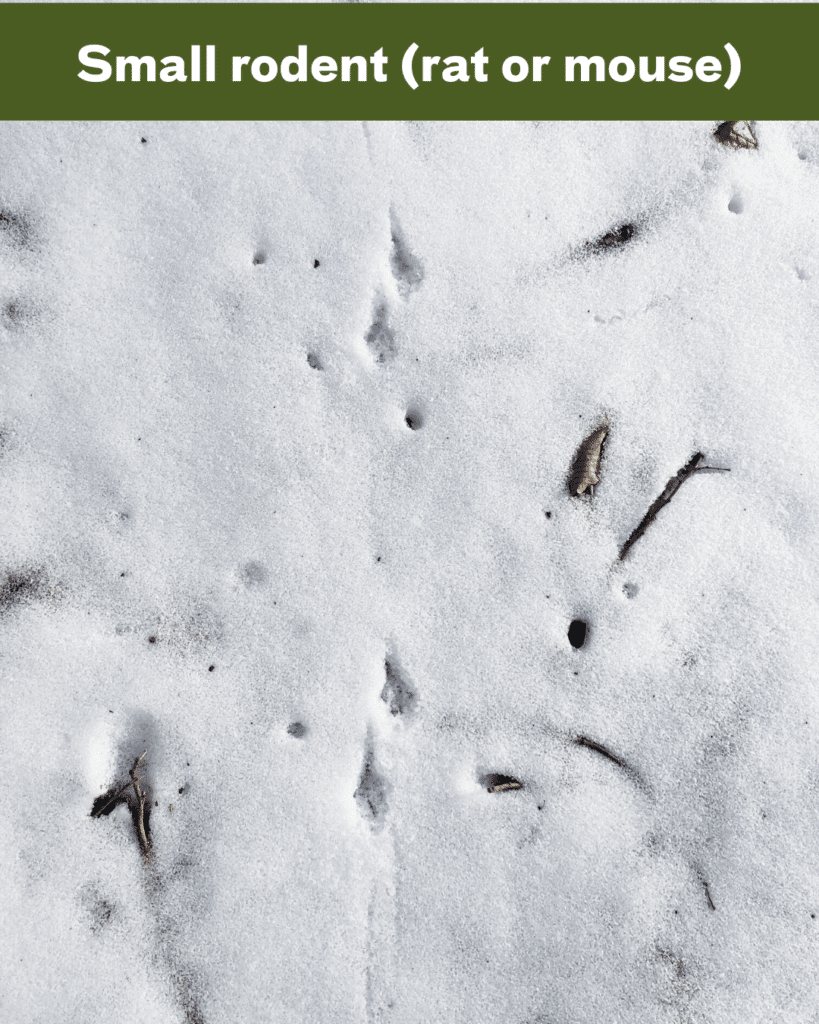
Clues to look out for:
- You may spot tiny prints from time to time that are likely from rats or mice
- Generally, it is difficult to tell the tracks apart but rat prints tend to be larger, and leave 4-toed front prints, and 5-toed hind prints
- Mouse prints are much smaller, appear dotted and scattered
6. Dog prints vs. coyote prints
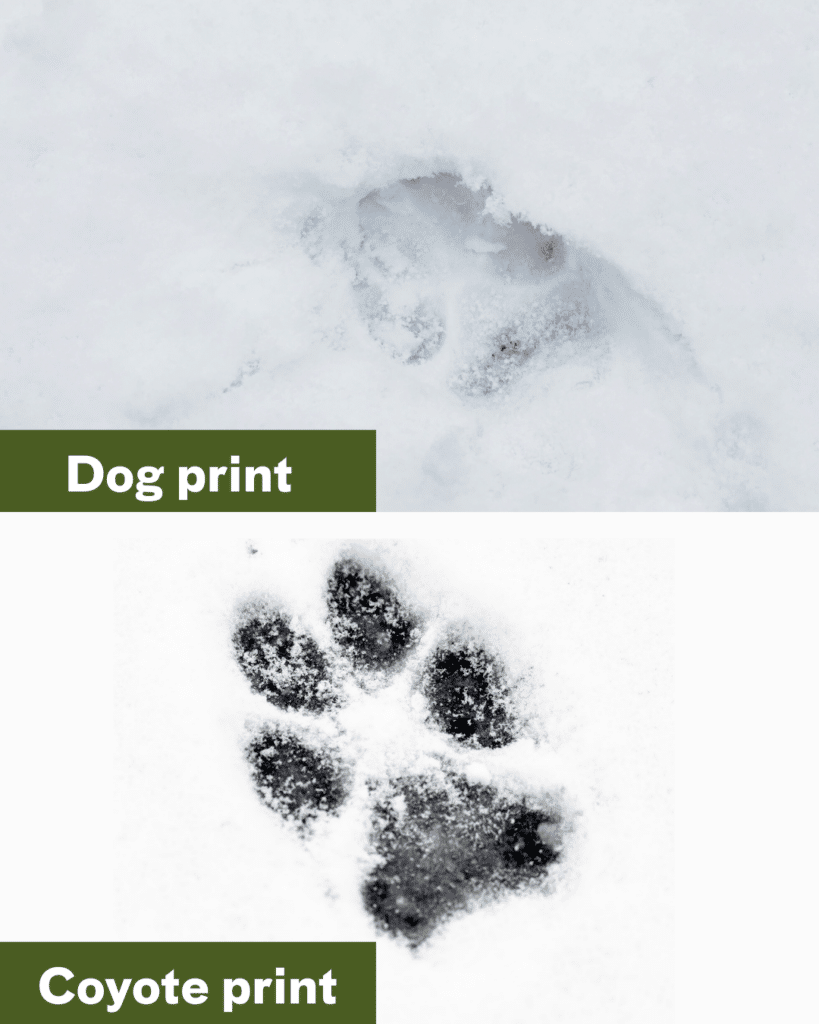
Clues to look out for:
- Dogs’ prints are wide, round, and can differ in size based on the breed of dog, but usually have blunt claw marks
- They can be mistaken for coyote tracks (which you’ll likely only see in the Bronx or Queens), which are more narrow, oval-shaped (2.5–3.5 inches long), and have forward-pointing, more slender toe pads with sharper claw marks.
- Their prints are not as tightly clumped together like dog prints.
Aced animal print ID? Check out these 5 birds to look out for in NYC winter!